Broken clip, stopped roller, a problem for maintenance: how the 4-clip roller holder breaks that sequence
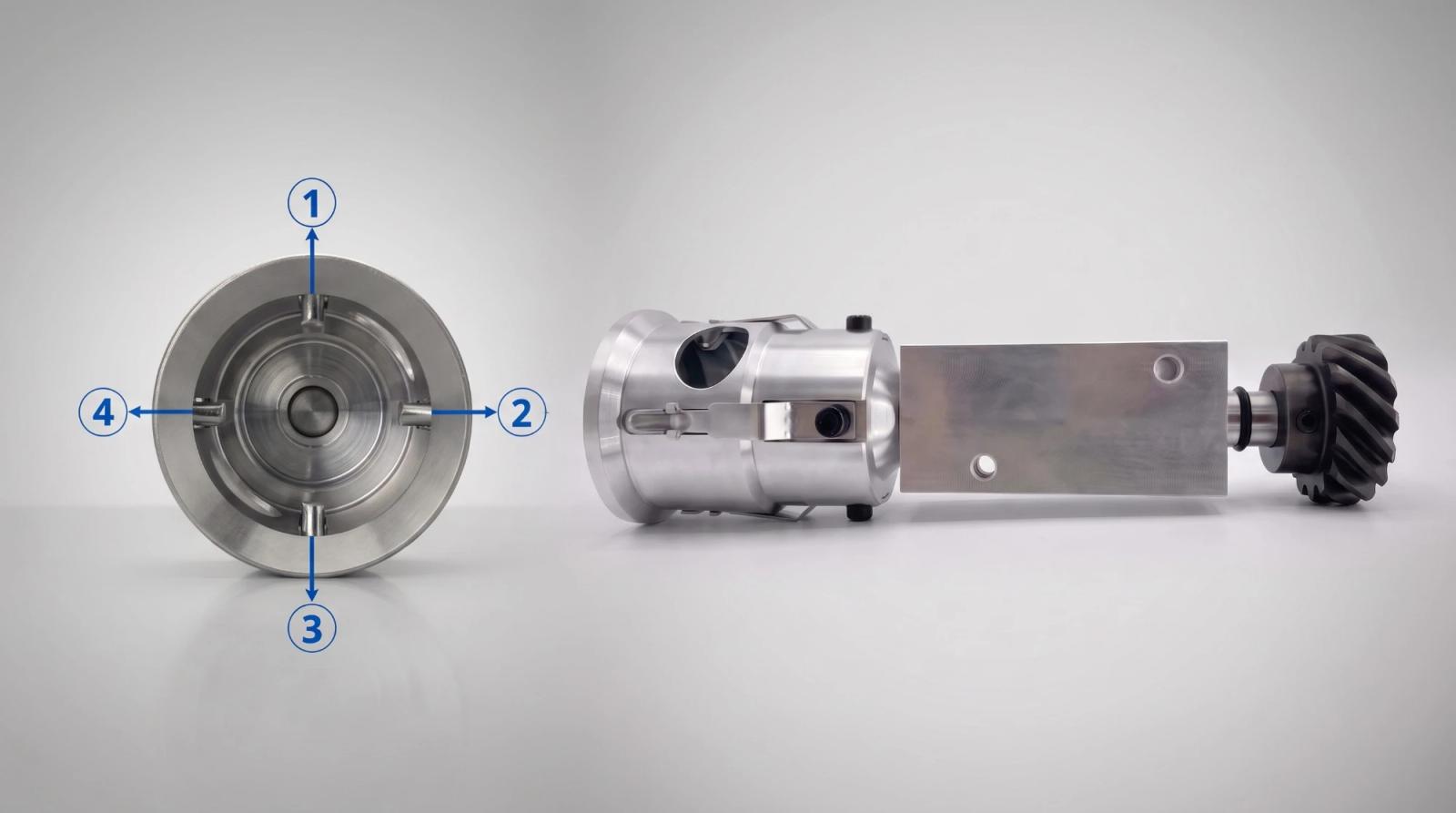
Anyone who runs roller kilns knows the sequence: a roller stops turning, the material on it loses speed, the material behind keeps advancing and the line jams. In most cases the cause is not the roller — it is a traction clip that has broken. The PACE 4-clip roller holder was developed to act on exactly that point.
When all the drive passes through two clips
The roller holder transmits the kiln's drive to the ceramic roller. Resting on the support beam and fitted with bearing and gear, it drives the roller through the clips seated in the key.
In the conventional configuration, with two seats, the entire traction effort — plus the weight of the material and the thermal conditions inside the kiln — passes through only two contact points. The consequence is predictable and always the same: the clip scores, deforms and breaks.
What follows makes it worse. With one clip broken, the remaining one takes on alone the load that was shared between two: twice the effort on an already worn part. One break pulls the next, and the roller stops.
The real cost of a broken clip
The roller holder keeps turning with the drive, but the ceramic roller does not follow. The material on it loses speed, the material behind keeps its own, one meets the other and the kiln jams.
From that point the problem is no longer spare parts, it is production: broken material inside the module, shards between the rollers, the risk of damaging neighbouring rollers and, often, an emergency stop for cleaning, with the cooling and reheating that this imposes.
The cost of a clip, therefore, is never just the price of the clip. It is measured in hours of kiln downtime and in lost batches.
Four clips: the same effort, distributed
Adding clips looks like an obvious solution once it is done. It is not. Every extra fixing point has to sit exactly where all four work together. That is the arrangement PACE engineering developed and validated in real operation, in a customer's kiln, before turning it into a product.
The result is four clips distributed at 90° to one another. The effort needed to turn the roller stays the same, but the drive no longer comes from one side only, and each clip now works with a fraction of the previous load. Less load per clip extends its service life, and a clip that lasts longer is a roller that keeps turning. The distribution also gives the assembly more margin to work with heavier rollers and larger diameters.
There is one more decisive effect in operation: the loss of capacity is staged. With one clip broken, three keep driving. With two, two still remain. The roller keeps turning, the line keeps producing, and the team identifies the wear, assesses the assembly and decides when to stop and replace it. Maintenance stops being corrective and becomes planned.
There are systems today that warn when a roller has stopped inside the kiln, but by then the problem is already happening. What PACE is after with the 4-clip roller holder is different: giving maintenance time to act before the line is affected.
What changes in operation
Clips with a longer service life mean fewer changes, fewer ceramic rollers discarded and less need for spare parts tied up in stock for emergencies. In a continuous kiln, a planned stop costs a fraction of a stop caused by a jam.
One caveat PACE wants on the record: actual service life depends on the conditions of each installation — the kiln's thermal sealing, the temperature profile of the zones, the weight of the load and the maintenance routine. What the 4-clip design does is remove one recurring cause of failure. It does not replace the other variables of the process.
Compatibility
The 4-clip roller holder serves roller kilns of different makes, models and years of manufacture. Compatibility is defined by the dimensional set: roller diameter, support and drive.
Send us the roller dimension, the code of the part currently in use or a photograph, and our technical team identifies the matching part.
PACE has produced drive components for roller kilns and dryers since 1986, with ISO 9001:2015 certification.
Frequently asked questions
Does the ceramic roller become more fragile with 4 clips?
No. With the drive shared across four points instead of two, each contact point takes less effort. In practice the roller works under less stress, not more.
Why can one broken clip jam the kiln?
Because the roller that loses drive stops turning while the others carry on. The material on it is held back, the material behind rides over it, and the build-up causes breakage inside the module, shards between the rollers and, in many cases, an emergency stop for cleaning. The loss is always greater than the value of the part that caused the failure.
If one of the four clips breaks, does the roller stop?
No. The remaining three keep driving and the roller carries on turning normally. If a second one breaks, two still remain. That margin is what lets the operator spot the wear and schedule replacement of the assembly at the next stop. With a 2-clip roller holder the situation is different: the first break immediately overloads the remaining clip, which tends to break soon after.
Can I use the clips I already have?
Yes. The clip is the same one used in both the 2-seat and the 4-seat roller holders. The difference is the quantity: four units per assembly.
What is the service life of the assembly inside the kiln?
In continuous operation, months. The interval varies with the kiln's thermal sealing, the temperature of the zones, the weight of the load and the maintenance routine. That is why PACE does not work with a fixed figure: the assessment is made from each line's own replacement history.